Difference Between Machine and Hand Plaster: Application Method, Setting Time, and Uses
What are the differences between machine and hand plaster? A comparison of the application method, setting time, strength, and uses of polymeric Siva hand and machine plaster versus regular hand plaster.
Short Answer: Hand plaster is made by hand and applied to the surface with a trowel, while machine plaster (sprayed) is mixed in a plastering machine and sprayed onto the wall. Machine plaster is more suitable for large surfaces and quick application, while hand plaster is better for smaller jobs, repairs, and areas that the machine cannot reach. Both types are offered in the product line of Semnan Gypsum by Gach Sahar, and the final setting time for both is 120 minutes.
To familiarize yourself with all types of gypsum and their applications, check out the article Types of Semnan Gypsum and Their Applications. This article specifically addresses one question: what are the differences between machine and hand plaster, and which is more suitable for your project?
What is Hand Plaster?
Hand plaster is the familiar method of plastering. The plasterer mixes the powder with water in a container and applies the mixture to the wall or ceiling with a trowel and float. Regular base and finish plasters are also applied in this way. The setting time for these plasters is short. For instance, according to the specifications of Dena Base Plaster, the initial setting time is about 6.5 to 7 minutes, and the final setting time is 14 to 15 minutes. Therefore, one should only mix enough for a few minutes of work at a time.
Polymeric Siva Hand Plaster is also applied by hand, but its working time is significantly longer. According to the product specifications, its final setting time is 120 minutes. This plaster is applied in a single layer, has minimal waste, is resistant to wear and scratches, and does not require a resin coating before painting. Its primary application is for finishing all-concrete structures (tunnel form).
What is Machine Plaster (Sprayed)?
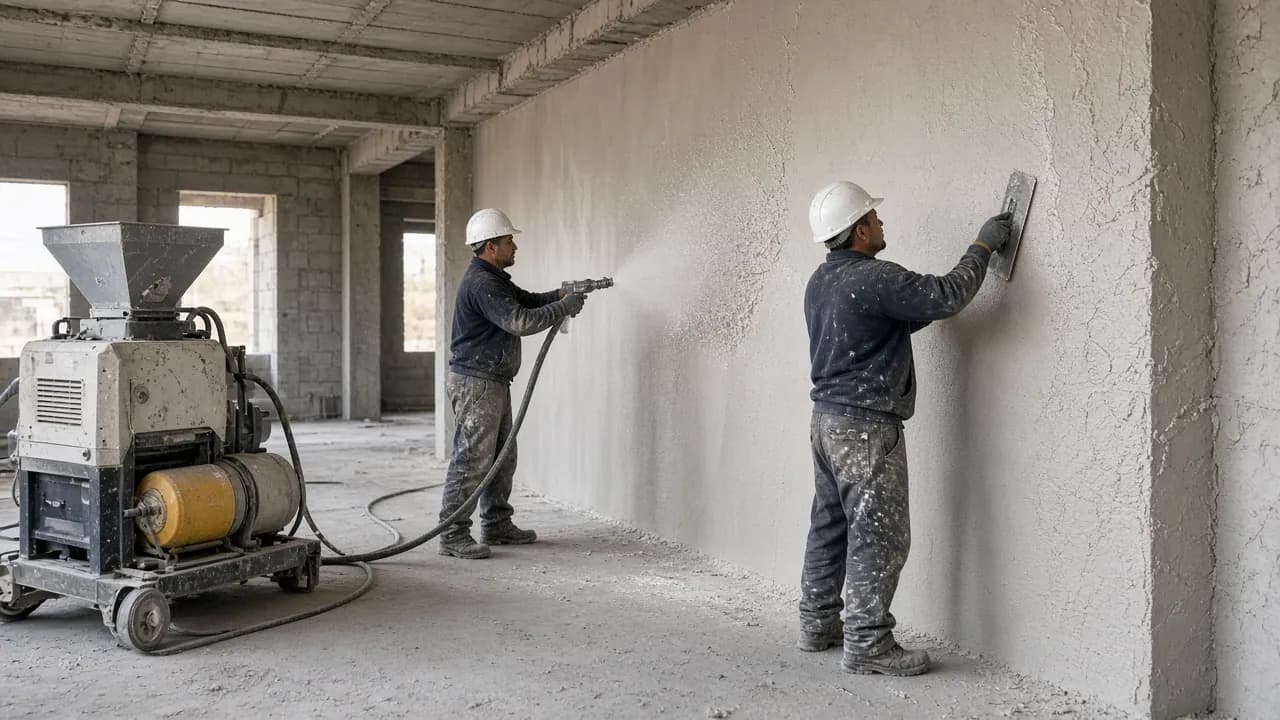
In machine plaster, the powder and water are mixed inside the plastering machine, and the mixture is sprayed onto the surface using a pump and hose. After spraying, the plasterer smooths the surface with a straightedge and trowel. Since the mixture needs to stay in the machine and hose for some time before being smoothed onto the surface, machine plaster must have a longer working time. For this reason, regular base plaster with a few minutes of setting time is not suitable for this method, and machine plasters have a separate formulation.
According to the specifications of Polymeric Siva Machine Plaster, this product has a high application speed and a lower specific weight than regular plaster. Siva machine plaster can be applied in a single layer on various surfaces: brick, porous and cement blocks, concrete surfaces, lightweight concrete blocks, cement coatings, and even foam.
Single-layer application in machine plasters is not exclusive to this product. For example, the technical sheet for Knauf's MP 75 machine plaster also introduces it as a single layer, mentioning an average layer thickness of 10 millimeters (source 1).
Comparison Table of Machine and Hand Plaster
| Feature | Regular Hand Plaster (Base/Finish) | Siva Hand Plaster | Siva Machine Plaster |
|---|---|---|---|
| Application Method | By hand and trowel | By hand and trowel | By plastering machine |
| Initial Setting Time | 6.5 to 7 minutes | Not specified (none) | Not specified (none) |
| Final Setting Time | 14 to 15 minutes | 120 minutes | 120 minutes |
| Flexural Strength (2 hours) | 2.2 to 2.8 MPa | 4 MPa | 4 MPa |
| Compressive Strength | 9 to 10 MPa | 8 MPa | 8 MPa |
| Grain Size | 100 | 60 | 60 |
| Bag Weight | 25 or 30 kg | 30 kg | 30 kg |
> The numbers in the table are quoted from the product specification sheets on the website's store. Please check the updated specifications on each product page before ordering.
Which One Should We Choose?
Important Execution Tips
For more details about the working time of each type of plaster, see the article Plaster Setting Time.
Purchase Siva Hand and Machine Plaster from the Factory
Both products are available in 30 kg bags, and the minimum order from the factory is 10 tons. Prices are at the factory gate, and shipping costs are calculated separately. Loading at the factory is done 24 hours a day. For shipping details and return conditions, see the Shipping and Return Conditions page, and for current prices of other products, check the Today's Semnan Gypsum Prices page.
References
FAQ
تفاوت اصلی گچ ماشینی و دستی چیست؟
گچ دستی با دست ساخته و با ماله روی سطح کشیده میشود. گچ ماشینی (پاششی) در دستگاه گچپاش با آب مخلوط و با پمپ روی سطح پاشیده میشود و بعد صاف میشود. گچ ماشینی برای سطحهای بزرگ و اجرای سریع مناسبتر است.
زمان گیرش گچ سیوا دستی و ماشینی چقدر است؟
طبق برگه مشخصات محصولات گچ سحر، گیرش نهایی هر دو نوع گچ پلیمری سیوا دستی و ماشینی ۱۲۰ دقیقه است. گیرش نهایی گچ زیرکار و روکار معمولی ۱۴ تا ۱۵ دقیقه است.
آیا میتوان گچ زیرکار معمولی را با دستگاه پاشید؟
گچ زیرکار معمولی گیرش چنددقیقهای دارد (گیرش اولیه حدود ۶٫۵ تا ۷ دقیقه). ملات در دستگاه و شلنگ و هنگام صاف کردن به زمان کار طولانیتری نیاز دارد، به همین دلیل برای اجرای ماشینی از گچهای ماشینی مخصوص استفاده میشود.
گچ سیوا دستی برای چه کاری مناسب است؟
گچ سیوا دستی برای سفیدکاری سازههای تمامبتنی (قالب تونلی) به کار میرود. تکلایه اجرا میشود، دورریز کمی دارد و پیش از رنگکاری به پوشش رزینی نیاز ندارد.